




There are times when a car breathes like it’s struggling, like it’s catching its breath after a sprint. Not because a dashboard light comes on or something’s making a horrible noise, but because you feel it — a lack of energy, a dull sound, and that nagging sense that something’s off. That’s where the CirueloGTI was.
After several critical repairs, it was time to focus on a deeper system: the intake and the sensors that tell the engine how to behave.
A better way to breathe
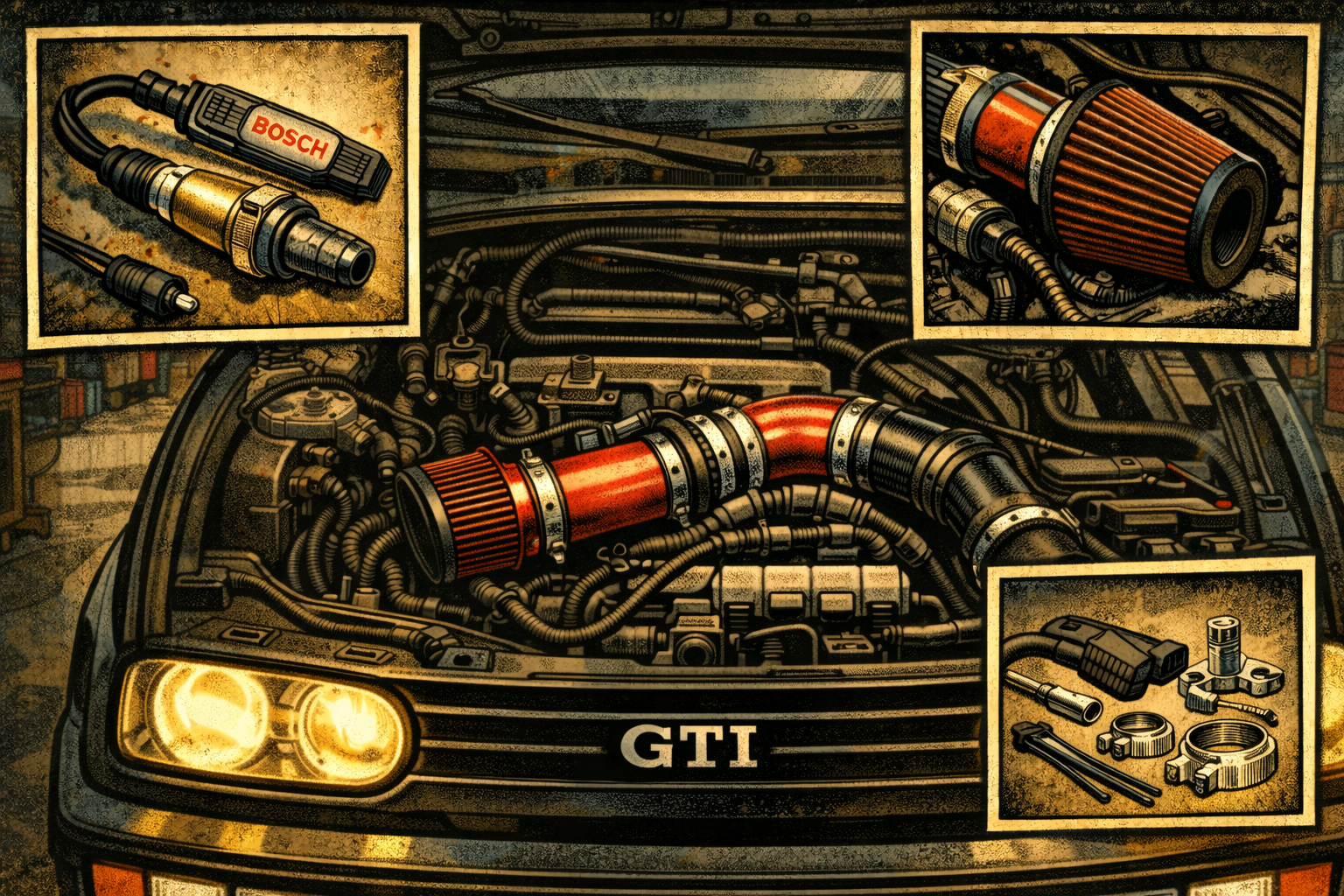
We started with what seems like a basic upgrade: a proper intake tube. The one it had was leaking and poorly rigged with random parts. We swapped it out for a well-sealed tube with solid connectors and a brand-new hose. Not only did this improve airflow, it also eliminated any air leaks that could mess with the engine’s readings.
Right after the install, the engine sound changed — cleaner, smoother. No, it’s not a turbo, but you can definitely feel the difference when accelerating. The car breathes better, which means it drives better.
The sensors behind performance
One of the most overdue changes was the oxygen sensor. We installed a brand-new Bosch one, and just like that, the GTI stopped guessing how much fuel to inject. The old sensor was sending bad data, which meant poor air-fuel mix, wasted gas, and sluggish performance.
We also took the opportunity to review the alternator circuit. It’s not directly part of the intake system, but if your electronics aren’t working right, your sensors won’t either. Sometimes the part isn’t broken — the wiring is.
The invisible upgrades that matter
Along with all this came the small things: clamps properly installed, minor replacements, clean connections. These aren’t flashy upgrades like new rims or a spoiler, but they transform how the car behaves.
The CirueloGTI is changing, slowly but surely. It’s no longer gasping. It’s finally breathing deep.